
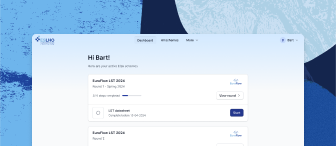



EuroClonality IG/TR 2026
EuroClonality IG/TR EQA scheme 2026
Aim of the scheme
The aim of the EQA scheme for IG/TR clonality testing in suspected lymphoproliferations/lymphoma is to assess the capability of each participating laboratory to correctly identify and interpret immunoglobulin (IG) and T cell receptor (TR) gene rearrangement patterns in suspected lymphoproliferations.
Analysis of the wet cases should be performed by using the BIOMED-2/EuroClonality multiplex PCR ‘tubes’ or another technique (e.g., NGS) that allows an evaluation per IG/TR gene locus (such as amplicon or capture based NGS). This allows laboratories to identify issues with their wet lab performance.
Paper cases based on GeneScan patterns acquired with the BIOMED-2/EuroClonality multiplex PCR assays are part of this EQA as they allow to identify problems with only the interpretation of clonality patterns according to the EuroClonality guidelines (Langerak et al., Leukemia 2012;26:2159-71).
EQA cases
Five IG cases and five TR cases will be distributed. Each IG/TR EQA round is composed of 5 paper-based cases and 5 DNA samples extracted from a variety of different suspected lymphoproliferations/ lymphoma cases. A rotation system applies so that every 2 years 5 paper-based cases and 5 DNA samples for each of the 2 schemes (IG and TR) are distributed.
Participants need to test and/or interpret the EQA samples according to their laboratory’s routine practice, with the aim to improve and standardize diagnostic practices. Samples are presented as clinical cases and relevant clinical, flow cytometry and/or immunostaining data will be provided. As both hemato-oncology and pathology labs perform clonality analysis, sometimes for different clinical investigations, typical sample types (e.g. peripheral blood or FFPE tissue) will be included on a regular basis. The scheme organizers prepare the samples and distribute them to the participants. Cases are pretested by at least 4 laboratories of the EuroClonality EQA Committee members to obtain an initial consensus on the correct result. Coordination and evaluation of the results is done by the EQA provider together with the EuroClonality EQA Committee.
This year, participants will receive the following cases:
IG scheme: 2 DNA samples and 3 paper-based cases
TR scheme: 3 DNA samples and 2 paper-based cases
The materials distributed are provided as specimens for the sole purpose of enabling external quality assessment at the recipient’s laboratory during the current distribution and must not be tested for any other target than that which is requested by the EQA scheme. They do not constitute in vitro medical diagnostic devices (IVDs), and no claim is made that they may be suitable for any other purpose or at any other point in time.
Performance evaluation and report
The EQA provider will coordinate the evaluation of the submitted results. Results of the EQA round will be announced after discussion within the EuroClonality EQA Committee. These results will be made available anonymously among the participants but each participating laboratory will receive individual feedback.
Only information about IG/TR targets IGH and IGK (in the IG scheme) and TRB and TRG (for the TR scheme) will be evaluated. Regarding TRG, even though results from the two-tube assay (TRG tube A and B) can still be submitted, in 2026 these tubes will not be pre-tested anymore because the one-tube TRG assay has been available for more than 5 years and is the recommended assay to analyze the TRG locus.
Scoring will be done on the final “Molecular Interpretation/Conclusion” of each case and not on the interpretation of the individual PCR results, allowing laboratories who use non-EuroClonality protocols also to participate. However, in the final report, and during the EuroClonality EQA Virtual Sessions, results of EuroClonality PCR targets will be discussed in detail and feedback will be given.
The correct “Molecular Interpretation/Conclusion” will be determined by at least 4 EuroClonality laboratories during the pretesting phase. However, a case might be withdrawn from the EQA scoring in case high discordant results are obtained by the participants. The IG/TR EQA scheme allows participants to react on the score and/or comments they received. Appeals should be submitted via the ESLHO EQA Portal before the deadline for appeals that is communicated to participants. The appeals will be collected and will be discussed by the assessors. The laboratories will receive an individual answer and after this, the scores become final. Laboratories who are requested to submit a corrective action plan are required to do so within the timeframe stipulated in the report. All participants will receive an individual laboratory report stating their performance in this EQA round and, if applicable, of the last two EQA rounds. After two years, at least 9 out of 10 cases of each target should have been correctly assessed as determined by the “European Consensus Conference for External Quality Assessment in Molecular Pathology” (van Krieken et al., Virchows Arch 2013;462:27-37).
EQA Educational meeting
After release of the first version of the report, EuroClonality EQA Virtual Sessions are organized where the results of the IG and TR cases are presented and discussed. These online meetings are usually planned in January. More info will follow at the end of 2026.
Registration and participation fee
In 2026, ESLHO's EuroClonality IG/TR EQA scheme is only available for participants of the EuroClonality Consortium. Participation is free of charge.
Organization
The IG/TR EQA scheme is organized by ESLHO (EQA Program Coordinator: Prof. Dr. Jacques J.M. van Dongen) in collaboration with the EuroClonality EQA Committee (general coordination by Dr. Paula Gameiro). The members of the EuroClonality EQA Committee are participants of the EuroClonality Consortium. The EuroClonality subject-matter experts provide support for:
Pre-round: Case selection, determination of consensus results
Post-round: Data analysis, performance evaluation, reporting
Details on the task division can be found below.
Task division
Name | Organization/Institute | Tasks |
|---|---|---|
Dr. Paula Gameiro | Portuguese Institute of Oncology, Lisbon, PT | Coordination of paper case collection and selection; Paper case pre-testing, selection & consensus; Review data analysis; Draft report; Coordination tasks on behalf of EQA Committee |
Dr. Elke Boone | AZ Delta Hospital, Roeselare, BE | Paper case pre-testing, selection & consensus; Wet case post-testing; Review data analysis; Draft report (lead) |
Dr. Millaray Marincevic Zuniga | Uppsala University Hospital, Uppsala, SE | Coordination of wet case collection and selection; Wet case pre-testing, selection & consensus; Review report |
Dr. Patricia Groenen | Radboud University Medical Centre, Nijmegen, NL | Paper case pre-testing, selection & consensus; Wet case pre-testing; Review report |
Dr. Liz Hodges | Belfast City Hospital, Belfast, UK | Paper case pre-testing, selection & consensus; Review report |
Dr. María Eugenia Sarasquete | Salamanca University Hospital, Salamanca, ES | Wet case pre-testing, selection & consensus; Review report |
Dr. Benedict Milner | NHS-Grampian, Aberdeen, UK | Wet case pre-testing, selection & consensus; Review report |
Nicola Meakin FRCPath | University Hospital Southampton, Southampton, UK | Wet case pre-testing, selection & consensus; Review report |
Prof. Dr. Jacques J. M. van Dongen | ESLHO, Zutphen, NL | Final responsibility for the scheme; Authorization of report |
Gonny van Muiswinkel | ESLHO, Zutphen, NL | Responsible for organization and operation of the scheme; Preparation and distribution of wet case samples; Data analysis; Draft report |
Dr. Bart Lubbers | ESLHO, Zutphen, NL | Support for organization and operation of the scheme |
Complaints
Complaints related to ESLHO’s EQA program, the ESLHO EQA Portal, or specifically to the EuroClonality IG/TR EQA scheme, can be submitted at any time via the Complaints form that can be accessed via the "More" menu.